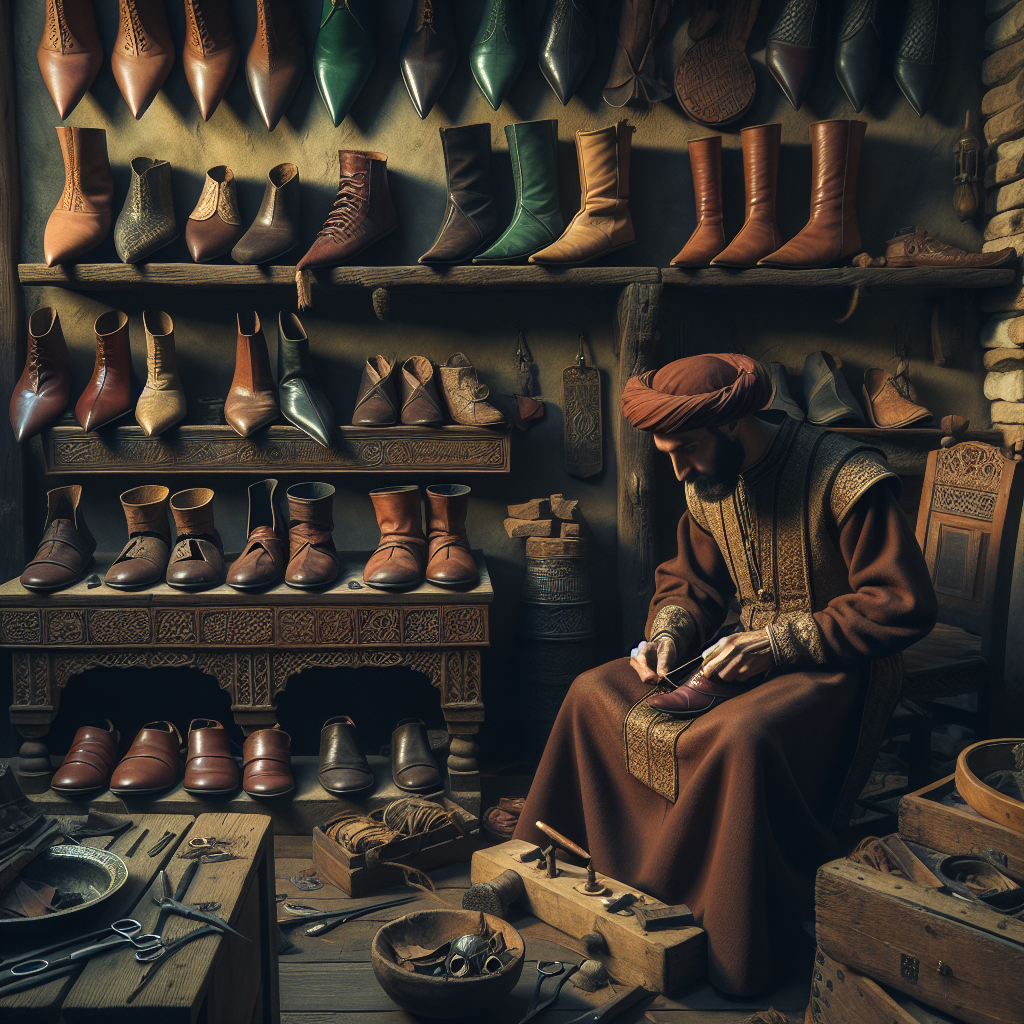
Exploring the Footwear of the Medieval Period
The medieval period, a fascinating era spanning from the 5th to the late 15th century, is often romanticized for its knights, castles, and epic battles. But have you ever wondered what people wore on their feet during this time? 🏰 In this blog post, we’ll delve into the intriguing world of medieval footwear, exploring the styles, materials, and functions that characterized this essential part of daily life.
Table of Contents
1. Introduction to Medieval Footwear
2. The Evolution of Shoe Styles
3. Materials and Craftsmanship
4. Footwear for Different Social Classes
5. Special Footwear: Boots, Pattens, and More
6. The Role of Footwear in Medieval Society
7. Conclusion
8. FAQs

Introduction to Medieval Footwear
Footwear in the medieval period was more than just a basic necessity; it was a reflection of one’s social status, occupation, and even regional identity. From simple bag-like shoes to intricately designed boots, the diversity in medieval footwear was as vast as the era itself. Let’s embark on a journey to understand how these shoes were made, who wore them, and how they evolved over time. 🥾
The Evolution of Shoe Styles
The design of shoes during the medieval period underwent significant changes. In the early medieval period, people wore simple leather shoes with a basic turnshoe construction, where the seams were on the inside. These shoes were often ankle-high and lacked a hardened sole, making them flexible but not very durable.
As we moved into the high medieval period, fashion began to play a more prominent role. Poulaines, with their distinct long, pointed toes, became the talk of the town. This style was particularly popular among the nobility, signifying wealth and status. However, it wasn’t long before sumptuary laws attempted to restrict the length of the points, as they were deemed impractical and extravagant. 👠

Materials and Craftsmanship
Medieval shoemakers, or cordwainers, relied on various materials to craft their footwear. Leather was the most common material, sourced from cattle, goats, or deer. The tanning process, although rudimentary by today’s standards, was crucial in preparing the leather for durability.
Aside from leather, wooden soles were sometimes used, especially in the construction of pattens, which were overshoes designed to protect regular shoes from mud and dirt. The craftsmanship involved in making medieval footwear was intricate, with shoemakers often passing down their skills through generations, ensuring the survival of their craft. 🧵
Footwear for Different Social Classes
Footwear in the medieval period was a clear indicator of one’s social status. Nobility and royalty often wore shoes made from the finest materials, embellished with embroidery and even jewels. The common folk, on the other hand, had to make do with more practical and durable options.
Peasants typically wore simple leather shoes or clogs. These were designed for practical purposes, offering protection and comfort during long hours of labor in the fields. In contrast, the shoes of the wealthy were more about making a statement than serving a practical function. 💼
Special Footwear: Boots, Pattens, and More
Beyond the everyday shoe, the medieval period was home to several specialized types of footwear. Boots, often worn by soldiers and travelers, provided extra protection and support. They were made taller to guard against harsh weather and rough terrain.
Pattens, as mentioned earlier, were essential for keeping shoes clean and dry. These wooden or metal platforms were worn over shoes to elevate the wearer above the muddy streets. Another interesting style was the “turnshoe”, which was sewn inside out and then turned right side out for a seamless finish. These shoes were lightweight and flexible, ideal for indoor wear. 🥾
The Role of Footwear in Medieval Society
Footwear played a significant role in medieval society, not just as a utility but also as a cultural symbol. Shoes were often mentioned in literature and art, highlighting their importance in daily life and social hierarchy.
The transition from functional to fashionable footwear also mirrored broader societal changes, such as the rise of urban centers and the development of trade, which introduced new materials and styles to European markets. Shoes became a way to express individuality and status, much like today. 👞
Conclusion
Exploring the footwear of the medieval period offers a unique window into the past, revealing insights into the daily lives, cultural practices, and social structures of the time. From the simple to the extravagant, medieval shoes were a testament to human creativity and adaptability. Next time you lace up your sneakers or slip on your favorite pair of boots, consider the rich history of footwear that has paved the way for modern comfort and style. 🥳
FAQs
Q: What were medieval shoes made of?
A: Medieval shoes were primarily made of leather, though wooden soles were also used in some styles, like pattens.
Q: Why did medieval shoes have long points?
A: The long points, known as poulaines, were a fashion statement among the nobility, symbolizing wealth and status.
Q: How were medieval shoes constructed?
A: Most medieval shoes were constructed using the turnshoe method, where the shoe was sewn inside out and then turned right side out.
Q: Did everyone in medieval times have shoes?
A: While shoes were common, not everyone had access to high-quality footwear. Peasants often went barefoot or wore simple shoes, while the nobility enjoyed more elaborate designs.