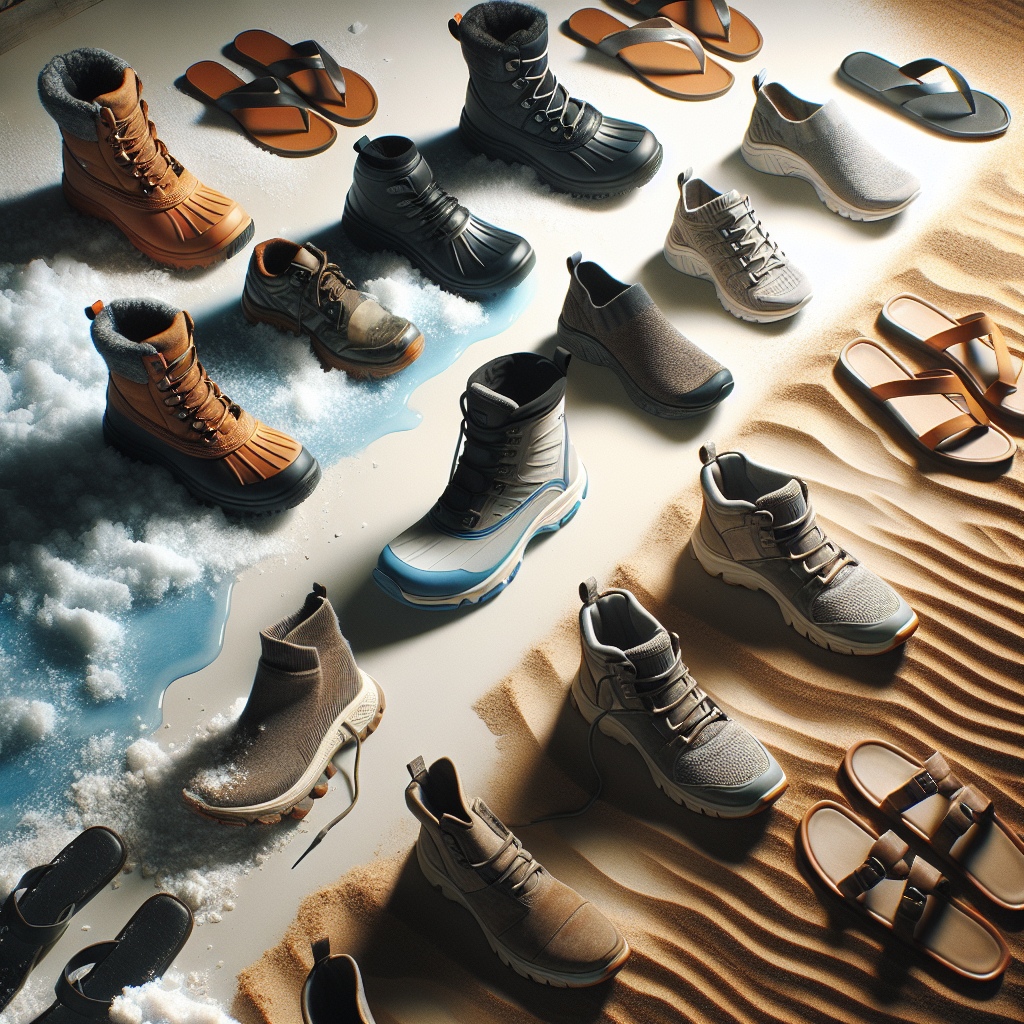
How to Choose Footwear for Different Climates 🌍👟
When it comes to choosing the right footwear, one size—or style—does not fit all, especially when considering the diverse climates of our planet. Whether you’re trekking through snowy mountains, strolling on sun-kissed beaches, or navigating the rainy streets of your city, the shoes you choose can make or break your experience. In this guide, we’ll explore how to pick the perfect footwear for various climates, ensuring comfort, safety, and style. Let’s step into it! 🏞️🌞🌧️
Table of Contents
1. Understanding Climate-Specific Needs
2. Footwear for Cold Climates ❄️
3. Footwear for Hot Climates ☀️
4. Footwear for Rainy Climates 🌧️
5. Footwear for Humid Climates 🌿
6. Conclusion: Stepping into Comfort
7. FAQs
Understanding Climate-Specific Needs
Before diving into specific footwear recommendations, it’s essential to understand that each climate presents unique challenges. For instance, cold climates may require insulation and waterproofing, while hot climates demand breathability and lightweight materials. Let’s break down these needs further.
Footwear for Cold Climates ❄️
When winter’s chill sets in, your feet are among the first to feel the cold. Choosing the right footwear can keep you warm and prevent frostbite. Here are some tips for selecting shoes for cold climates:
1. Insulation is Key: Look for boots with thermal insulation like Thinsulate or fleece-lined interiors. These materials trap heat, keeping your feet cozy.
2. Waterproofing: Snow and slush can quickly soak through non-waterproof shoes. Opt for footwear made with Gore-Tex or similar waterproof materials to keep your feet dry.
3. Traction Matters: Icy surfaces can be treacherous. Choose boots with rubber soles and deep treads to prevent slipping.
4. Consider Height: High boots can provide extra protection against snowdrifts and keep more of your leg warm.
Footwear for Hot Climates ☀️
Hot climates require footwear that can handle heat and keep your feet comfortable. Here are some considerations for choosing shoes in warm weather:
1. Breathability First: Opt for shoes made from mesh or other breathable materials to allow airflow and prevent sweaty feet.
2. Lightweight Design: Heavy shoes can be cumbersome in the heat. Look for sandals or lightweight sneakers that won’t weigh you down.
3. UV Protection: Prolonged sun exposure can damage your feet. Some shoes offer UV protection to shield your skin.
4. Open-Toe Options: Flip-flops or open-toe sandals are great for casual settings, but ensure they provide adequate support if you plan to walk long distances.
Footwear for Rainy Climates 🌧️
Rainy days call for shoes that can withstand wet conditions and keep your feet dry. Here’s what to look for:
1. Waterproof Materials: Just like cold climates, rainy areas require waterproof shoes. Rubber boots or shoes with sealed seams are excellent choices.
2. Quick-Drying: In case water does get in, quick-drying materials can help prevent discomfort and blisters.
3. Non-Slip Soles: Wet surfaces can be a slipping hazard. Opt for shoes with non-slip soles to maintain your footing.
4. Ankle Support: Walking in rain often means dealing with uneven, slippery ground. Shoes with good ankle support can help prevent injuries.
Footwear for Humid Climates 🌿
Humidity can be a tricky beast, causing discomfort and even foot health issues. Here are some tips for footwear in humid environments:
1. Moisture-Wicking Liners: Shoes with moisture-wicking properties help keep your feet dry and comfortable.
2. Anti-Microbial Features: Humidity can lead to bacterial growth. Look for shoes with anti-microbial treatments to reduce odors and infections.
3. Open Design: Sandals or shoes with plenty of ventilation are ideal for letting your feet breathe in humid conditions.
4. Flexible Soles: Humidity can soften ground surfaces. Flexible soles help maintain traction and comfort.
Conclusion: Stepping into Comfort
Choosing the right footwear for different climates is more than just a matter of fashion—it’s about comfort, safety, and health. By understanding the unique demands of each climate and selecting shoes that cater to those needs, you can ensure that your feet are well-protected and comfortable, no matter where your adventures take you.
FAQs
Q1: Can I use the same pair of shoes for different climates?
A1: While some versatile shoes can handle multiple climates, it’s generally best to have specific footwear for each environment to ensure comfort and protection.
Q2: What materials should I avoid in rainy climates?
A2: Avoid shoes made from materials like canvas or untreated leather, as they can become waterlogged and uncomfortable.
Q3: How can I maintain my shoes for longer life?
A3: Regular cleaning, waterproofing sprays, and proper storage can extend the life of your shoes, regardless of the climate.
Remember, happy feet lead to happy adventures. Be sure to equip yourself with the right pair for every climate! 🌍👟